Calera Computing derives cognitive architecture from mathematical first principles — not statistical approximation. We build systems where every output is provable, traceable, and deterministic.
Calera Computing, Inc. is a Delaware C-Corporation building the next generation of deterministic cognitive systems. Our architecture is organized around algebraic constants that emerge from lattice geometry — the same constants that govern energy propagation in simplicial structures across dimensions.
We don't approximate. We don't predict. We derive. Every architectural decision traces back to a mathematical proof. That's not a philosophy — it's a structural constraint.
Our research establishes the mathematical foundations of the xd = x + 1 hierarchy — the family of algebraic constants that organize energy propagation on simplicial lattices across dimensions.
We introduce the Cognitive Integrity Score (CIS), an operational, real-time topological health diagnostic for deterministic simplicial associative memory networks. We demonstrate that the sequence of Betti numbers (β0, β1, β2, β3, β4), computed via harmonic eigendecomposition of combinatorial Hodge Laplacians Δk = ∂kT∂k + ∂k+1∂k+1T, directly characterizes fundamental structural failure modes: β0 > 1 identifies concept space fragmentation; β1 >> 0 detects circular reasoning loops and associative trapping; and β2 >> 0 reveals relational voids (missing factual bridges). Monotonically gated with algebraic spectral connectivity (λgap), CIS achieves strong rank correlation (ρ = 0.9710, p < 10-37) with multi-hop retrieval accuracy, while boundary nilpotency (∂2 ≡ 0) enforces exact algebraic query refusal without statistical hallucination.
We prove that the algebraic polynomial family xd = x + 1 (for integer d ≥ 2), whose roots are known as generalized golden ratios, characterizes dual-channel boundary-bulk energy transport on d-dimensional simplicial lattices under a dominant characteristic-delay model. We formulate and prove the Face-Poset Delay Decomposition Theorem, establishing that the combinatorial face-poset topology of a regular d-simplex admits exactly two maximal transit channel classes: a boundary facet transit channel of characteristic delay d−1 hops, and a bulk interior transit channel of characteristic delay d hops. Under the dominant-delay approximation, the unique positive real root cd > 1 of xd = x + 1 induces the growth-rate partition identity cd−(d−1) + cd−d = 1, balancing asymptotic energy transport between boundary and bulk.
We prove that the polynomial family xd = x + 1 generates geometry-native organizing constants for Ad root lattices across dimensions — unifying the golden ratio (2D), plastic constant (3D), and σ-constant (4D) into a single hierarchy. Four independent lines of evidence: infinite-lattice Fourier analysis, algebraic recurrence, higher-order asymptotics with exact coefficients via Lagrange inversion, and a proof that the d-dimensional hyperbox subdivides into exactly C(2d−1, d−1) proportional types — extending Van der Laan's architectural system to four dimensions and beyond.
We derive σ ≈ 1.22074, the unique positive real root of x⁴ − x − 1 = 0, and demonstrate that it is the geometry-native organizing constant for energy propagation on the A₄ root lattice. The result is validated through two independent methods: Hopfield recall optimization and spectral Laplacian analysis. Zero free parameters. The lattice geometry determines the constant.
| Dimension | Equation | Constant | Name | Geometry |
|---|---|---|---|---|
| 2 | x² = x + 1 | φ ≈ 1.618 | Golden Ratio | Triangle, Pentagon |
| 3 | x³ = x + 1 | ρ ≈ 1.325 | Plastic Constant | Tetrahedron |
| 4 | x⁴ = x + 1 | σ ≈ 1.221 | σ-Constant | Pentatope, A₄ Lattice |
| 5 | x⁵ = x + 1 | ≈ 1.167 | — | 5-Simplex |
| ∞ | — | → 1.0 | Isotropic Limit | — |
Mathematical research, historical ironies, theological reflections, and corporate position papers from our editorial pipeline.

The 4-simplex has a palindrome in its geometry — (5, 10, 10, 5). A logician challenged faith to prove itself with evidence. Scripture made the same demand. So we built on God's created geometry and called it the Volumetric Lattice Network.
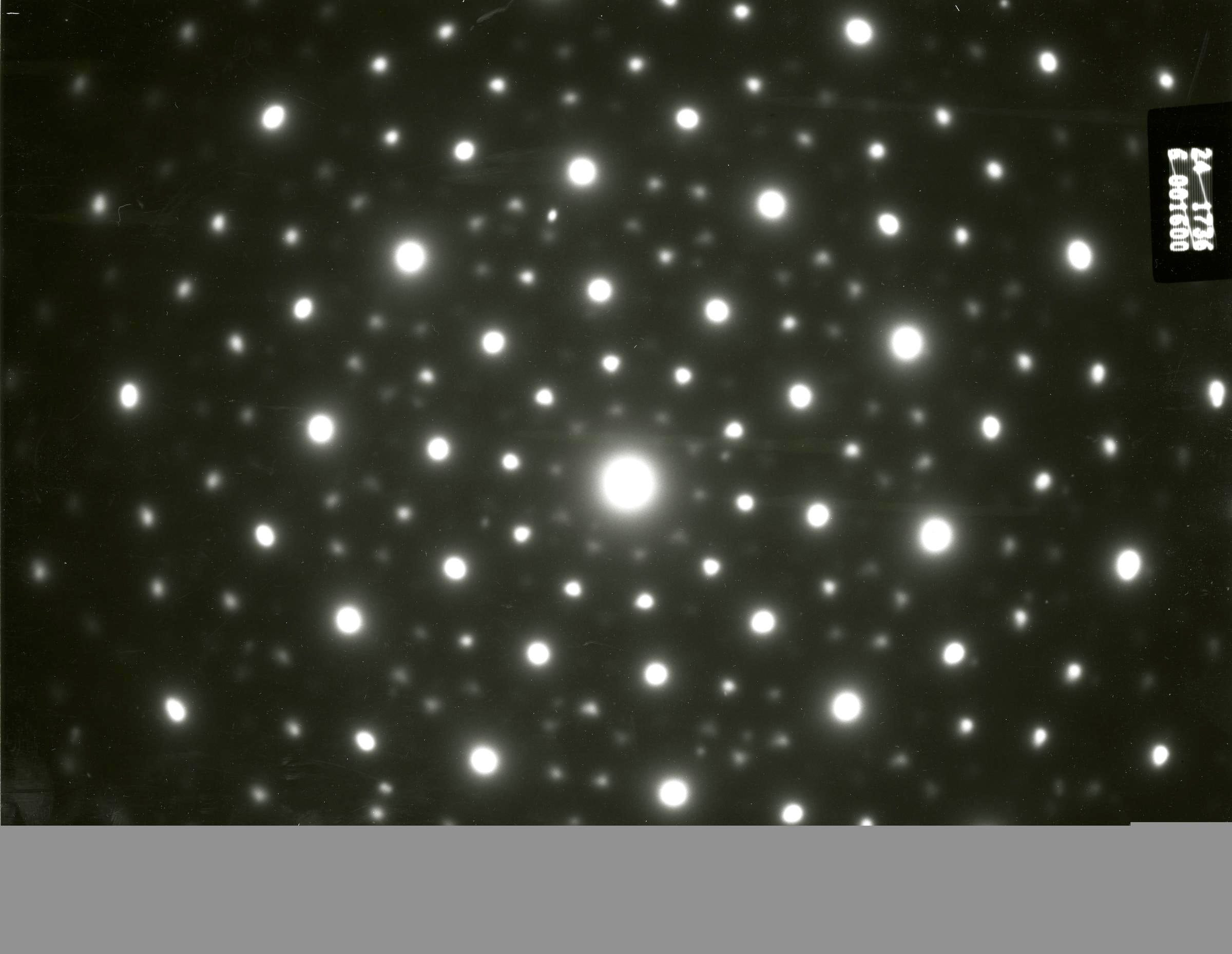
We project the four-dimensional A₄ root lattice to show how the five-fold symmetric aperiodic Penrose tiling emerges on the Coxeter plane, linking it to the xᵈ = x + 1 hierarchy of algebraic constants.

We derive the growth partition law (c_d⁻⁽ᵈ⁻¹⁾ + c_d⁻ᵈ = 1) for simplicial lattices. For the A₄ lattice, this balances boundary and interior propagation modes exactly (σ⁻³ + σ⁻⁴ = 1), acting as a Semantic Octave.